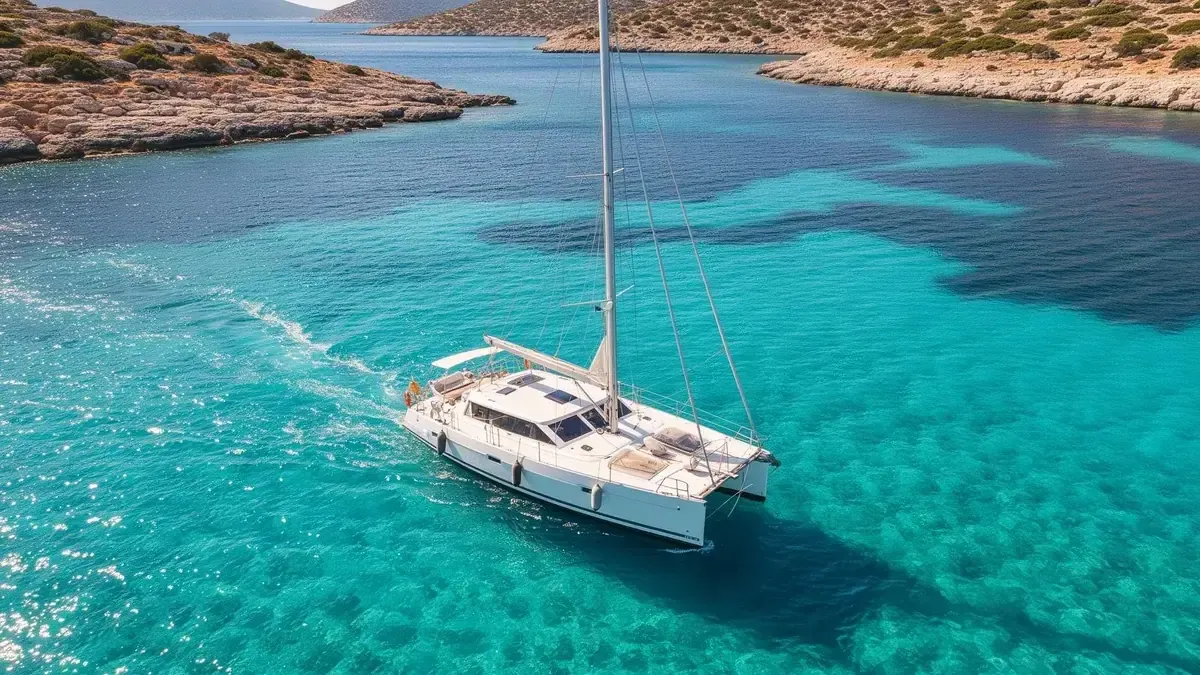
Bareboat Charter
Freedom on the Water —
Without Compromise.
Fully equipped vessels with no crew, no fixed itinerary, and complete navigational freedom across the world's most coveted coastlines.
Market Overview
The Fastest-Growing Segment for Independent Sailors.
30–50ft
Typical vessel range
$700–$3.5K
Daily rate range
65%
Repeat & referral bookings
20–30 wks
Annual utilisation
Bareboat represents the highest-growth segment for repeat charterers seeking independence. Enquire →
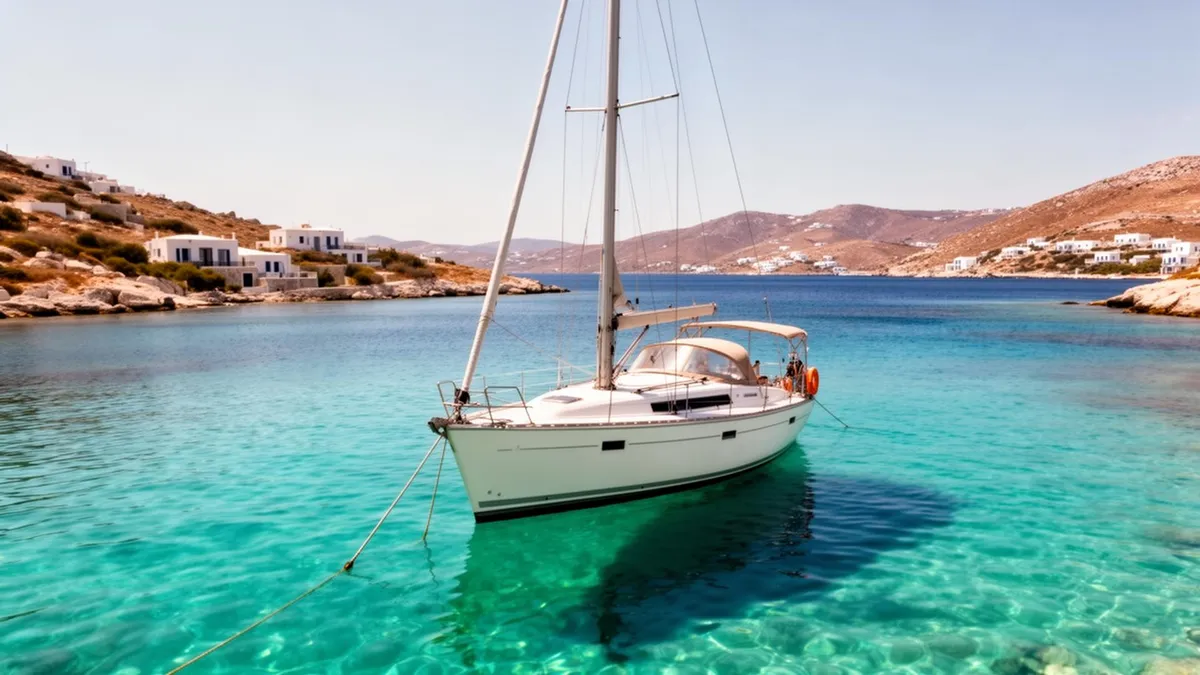
Revenue Benchmarks
Typical Bareboat Charter Economics
Industry-standard rate ranges for bareboat operations across key markets.
Daily Rate
$700–$3,500
Varies by vessel size & season
Weekly Rate
$5,000–$25,000
Standard 7-night bareboat charter
Peak Season Premium
+30–50%
July–August & Christmas/New Year
Annual Utilisation
20–30 weeks
Top-performing fleet average
Gross Yield per Vessel
$100K–$400K
Annual revenue before operating costs
Operating Margin
25–40%
After maintenance, insurance & marina
What's Different About Bareboat
Operationally & Commercially Distinct from Every Other Format.
Zero Crew Payroll on the Vessel
Bareboat is the only charter category where the operator carries no crew cost on the hull — no captain, no chef, no stew wages, no STCW rotation. The client is the licensed skipper. This changes the entire cost stack: operating margin sits in the 25–40% band on ~20% lower revenue than a crewed equivalent.
Licence-Gated Client Pool
Client acquisition is bounded by RYA Day Skipper, ICC, or ASA 104 certification. Roughly 220,000 active bareboat-qualified skippers exist worldwide — a finite, identifiable market that responds to skipper-community targeting, not luxury broker channels.
Fleet-Platform Distribution
Bareboat inventory is sold through booking platforms (Zizoo, GlobeSailor, YachtCharterFleet, MMK Booking Manager), not MYBA charter shows. Direct-booking share is materially achievable — 30–45% for operators with strong SEO and repeat funnels versus 5–10% for crewed superyacht operators.
Damage Liability & Deposit Model
Every booking carries a €1,500–€5,000 refundable damage deposit and a mandatory skipper qualification check. Insurance is structured around client-caused hull damage, not passenger liability — the risk profile and premium schedule are fundamentally different from crewed operations.
Volume, Not Rate, Drives P&L
A well-run bareboat fleet targets 24–30 weeks of utilisation per vessel per season, achieving revenue through volume. Rate optimisation matters far less than turn-time discipline, provisioning add-ons, and repeat-skipper retention (top fleets exceed 65% repeat rate).
Shorter Booking Windows
Median lead time is 8–14 weeks versus 5+ months for crewed charter, which means dynamic pricing and last-minute yield tooling produce disproportionate revenue lift. Same-week discounting is a legitimate channel, not a distress signal.
Bareboat Charter FAQ
What certification do clients actually need to bareboat charter?
In Europe: RYA Day Skipper (with ICC endorsement) or an ICC (International Certificate of Competence) is the practical minimum for vessels up to 24m in EU waters, plus VHF and often a sailing CV. Croatia and Greece additionally require an ICC-recognised licence physically on board plus a co-skipper for vessels above 15m. In the BVI and US Virgin Islands, ASA 104 or equivalent plus a sailing résumé is typically sufficient — but the yacht broker's briefing skipper still gates the release.
How is bareboat profitability different from crewed charter?
Bareboat operators typically run 25–40% net margins on gross revenues that are 15–25% lower than a crewed equivalent hull. Wages, provisioning, and APA don't exist as line items — but hull replacement cycles are shorter (7–10 years vs. 12–15 for crewed) due to higher damage frequency, and marketing spend per booking is materially higher because clients transact directly rather than through broker networks.
Which markets have the highest bareboat utilisation ceilings?
Croatia (28–30 weeks/season achievable), Greek Ionian and Saronic (26–28 weeks), BVI (year-round with hurricane-season gap, 30–34 weeks), and Balearics (22–26 weeks). Turkey and Sardinia sit in the 18–22 week band due to shorter shoulder seasons. The gap between top and bottom operators in the same market is usually 8–12 weeks — almost entirely a booking-funnel problem, not a pricing one.
What's the biggest revenue-leakage failure in bareboat operations?
Undermanaged turn-times. The gap between a checkout on Saturday morning and a checkin Saturday afternoon is where boats leak inventory: incomplete inventories force refunds, unresolved damage delays release to the next client, and unprovisioned yachts trigger charter-fee credits. Fleets that industrialise the turn (60-minute average, standardised inventory apps, ready-to-go provisioning packages) consistently outperform peers on both utilisation and NPS.
Explore Other Verticals
Revenue Architecture Across Every Niche
Catamaran Charter
Twin-hull stability & the fastest-growing segment.
View vertical →Dive Charter
Purpose-built liveaboard expeditions to remote reefs.
View vertical →Gulet Charter
Heritage craftsmanship on the Turquoise Coast.
View vertical →Day Charter
High-frequency, high-margin volume opportunity.
View vertical →Corporate & Events
Superyachts as exclusive floating venues.
View vertical →Ready to Scale Your Bareboat Revenue?
Our revenue architecture framework is designed to maximise yield across every bareboat in your fleet.
Request Strategic Audit