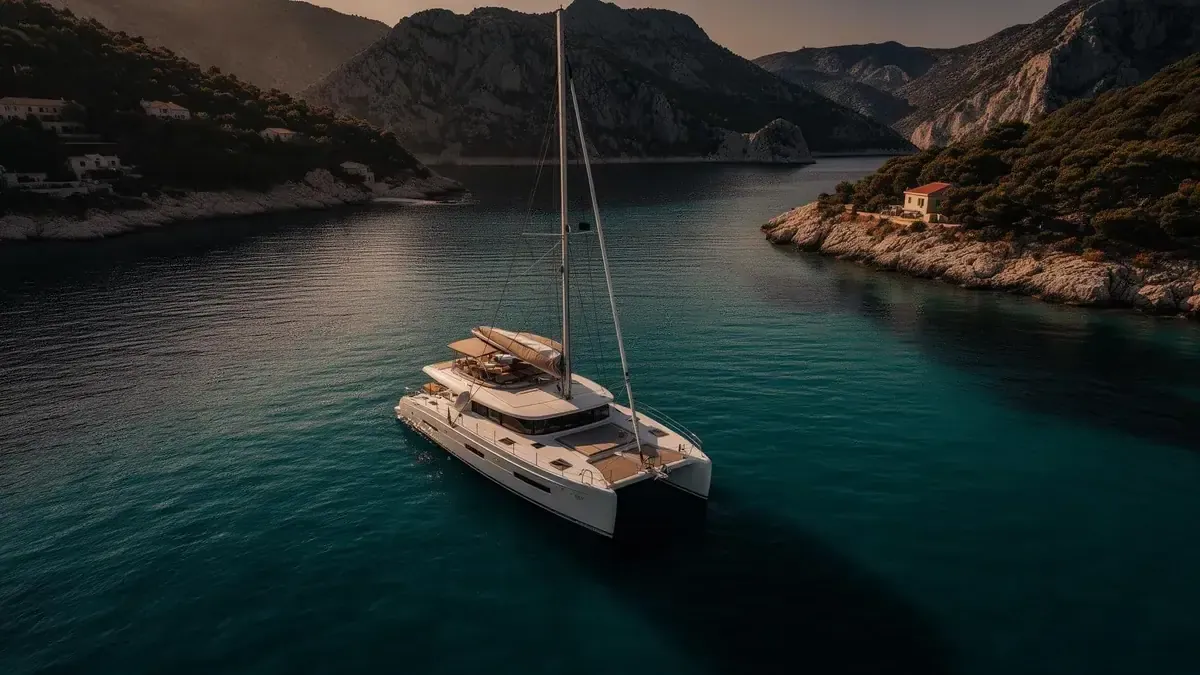
Catamaran Charter
Space, Stability &
Unmatched Versatility.
The fastest-growing segment in luxury charter — twin-hull performance meeting island-hopping demand across the Mediterranean, Caribbean & beyond.
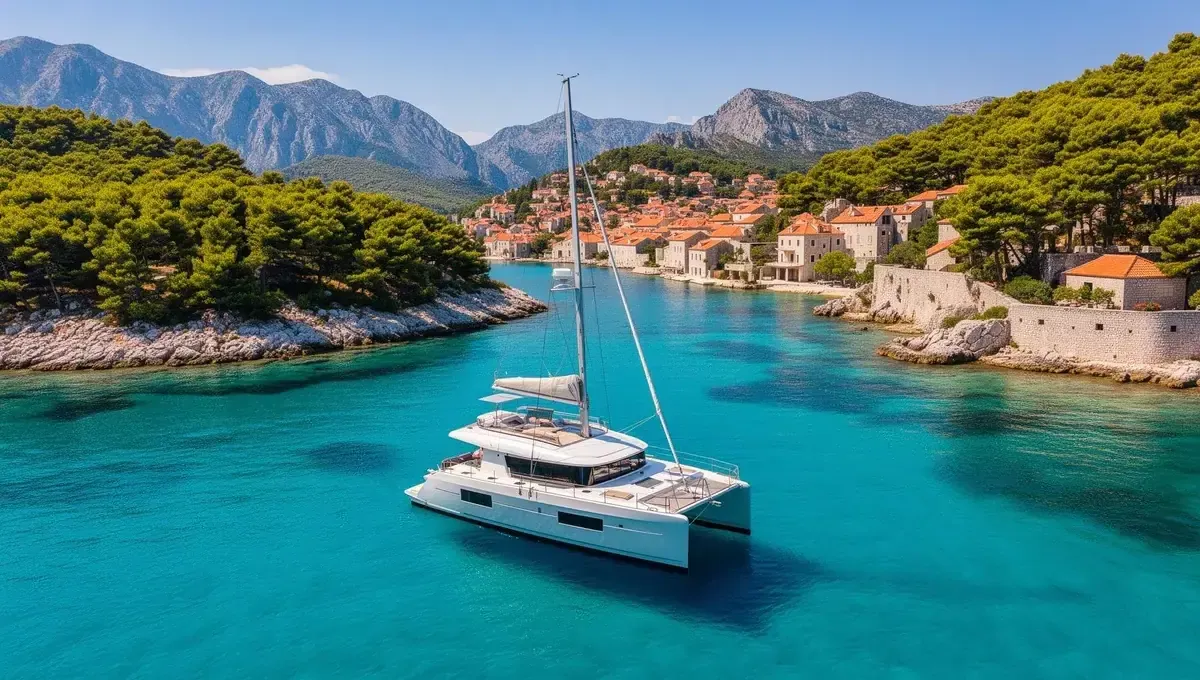
The Opportunity
The Segment Reshaping Global Charter Demand.
Catamarans now represent over 35% of new charter fleet builds worldwide. Their unmatched stability, spacious layouts, and shallow draft make them the vessel of choice for families, groups, and first-time charterers — driving the highest volume growth in the industry.
Croatia alone sees 15,000+ catamaran charter weeks annually. View market data →
Revenue Benchmarks
Typical Catamaran Charter Economics
Industry-standard rate ranges for catamaran operations across key markets.
Weekly Rate (40–45ft)
€4,000–€12,000
Seasonal range across Med & Caribbean
Weekly Rate (50–60ft)
€12,000–€30,000
Premium crewed catamaran segment
Peak Season Premium
+35–60%
July–August & Christmas/New Year
Annual Utilisation
18–26 weeks
Top-performing fleet average
Gross Yield per Vessel
€120K–€400K
Annual revenue before operating costs
Operating Margin
28–42%
After crew, maintenance & marina fees
What's Different About Catamaran Charter
Twin-Hull Economics Rewrite the Charter P&L.
40% More Sellable Interior Volume
A 50ft catamaran offers approximately the same beam-length interior volume as a 65ft monohull. This means larger cabins, level saloons, and true couples-friendly accommodation for four to six pairs — which is why catamarans dominate the family and multi-couple booking segments where monohulls cannot compete on liveability.
Level Sailing, Zero Heel
The stability advantage is not aesthetic — it converts prospects who would never book a monohull. Seasickness is the single largest client objection in charter sales; catamarans neutralise it. Operators report 3× higher first-time-charterer conversion rates on catamarans versus monohulls of equivalent price.
Shallow Draft = Anchorage Access Monohulls Cannot Reach
Typical catamaran draft is 1.1–1.4m versus 2.2–2.8m for a same-length monohull. This unlocks bays in the Bahamas, the BVI, Croatia's Kornati, and the Cyclades that no monohull can enter — a genuine itinerary differentiator that supports 15–20% higher weekly rates.
Two Engines, Two Hulls, Two Rudders — Double the Maintenance Line
Operationally, twin-hull yachts carry roughly 1.6–1.8× the maintenance cost of an equivalent-length monohull: two engines, two saildrives, two rudder assemblies, twice the through-hulls. Refit cycles are similar length but ~40% more expensive per event. This must be priced into weekly rates or margin erodes silently.
Charter-Fleet Dominant, Not Private-Owner Dominant
Roughly 78% of new catamarans built by Lagoon, Fountaine Pajot, Bali, and Leopard enter charter service in their first three years — largely through yacht-management programmes. This creates a distinct fleet-management-driven distribution economy quite unlike the private-owner-plus-broker model of superyacht charter.
Bareboat-Legal Ceiling Is Higher
In most jurisdictions, a Day Skipper / ICC holder can charter a 50ft catamaran but not a 50ft monohull without additional endorsements. This expands the qualified-skipper pool for bareboat catamaran fleets by an estimated 35–40% versus equivalent monohulls, driving the segment's growth curve.
Catamaran Charter FAQ
Why do catamarans command a premium over equivalent monohulls?
A 50ft crewed catamaran typically prices 25–40% above a same-length monohull, driven by three factors: sellable interior volume (roughly 40% greater), the marketable stability advantage (level sailing, no heel, better sleep), and shallow-draft anchorage access unavailable to keeled monohulls. In Croatia and the BVI, that premium can widen to 50% in peak season because family and group demand is inelastic.
What are the highest-yield catamaran markets globally?
By gross yield per vessel: BVI (year-round with 30-week ceiling, USD $180K–$400K annual net), Croatia (26 weeks, €200K–€420K annual net), Greek Ionian (24 weeks, €150K–€320K), and Bahamas/Exumas (28 weeks USD $150K–$350K). Newer emerging catamaran markets — Seychelles, Sardinia, and Turkey — sit in the €120K–€250K range with lower operating cost bases.
How does catamaran maintenance actually compare to monohull?
On a per-length basis, catamarans cost 60–80% more to maintain: two engines mean double the servicing intervals, twin saildrives require expensive 3-year seal replacements, and two rudder assemblies carry twice the failure risk. Antifouling costs roughly 1.5× (two hulls) and marina berthing runs 1.5–1.8× because pricing is per-metre of beam. Well-managed fleets provision 12–14% of gross revenue for maintenance versus 8–10% on monohulls.
Bareboat or crewed — where's the revenue growth on catamarans?
Bareboat catamarans are the volume story: Croatia added ~2,200 charter catamarans between 2019 and 2024, primarily bareboat. Crewed catamarans (50–65ft with 2–3 crew) are the margin story: fewer builds each year, near-100% peak utilisation, and gross weekly rates 3–4× the bareboat equivalent. Best-in-class operators run both segments in the same fleet, using bareboat for shoulder-season volume and crewed for July/August yield.
Explore Other Verticals
Revenue Architecture Across Every Niche
Bareboat Charter
Self-skippered freedom across the Med & Caribbean.
View vertical →Dive Charter
Purpose-built liveaboard expeditions to remote reefs.
View vertical →Gulet Charter
Heritage craftsmanship on the Turquoise Coast.
View vertical →Day Charter
High-frequency, high-margin volume opportunity.
View vertical →Corporate & Events
Superyachts as exclusive floating venues.
View vertical →Engineer Predictable Catamaran Revenue
From fleet positioning to seasonal yield optimisation — we build the system.
Request Strategic Audit