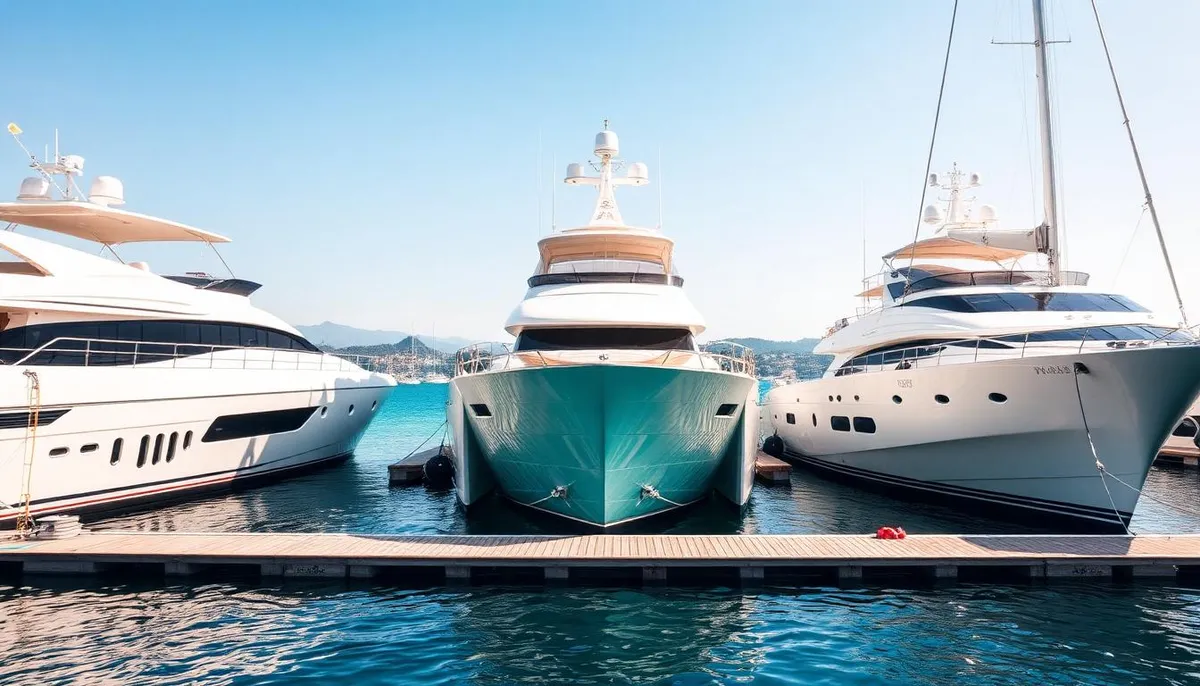
Choose a motor yacht for speed, luxury, and spacious interiors. Choose a sailing yacht for romance, tradition, and lower fuel costs. Choose a catamaran for stability, space, and family-friendly layouts. The right yacht type depends on your group composition, destination, budget, and whether you prioritise comfort, adventure, or social space.
Why Does Yacht Type Matter?
The yacht you choose shapes every aspect of your charter experience — from how you move between destinations to how you sleep, eat, and socialise. A motor yacht cruises at 12–20 knots, covering ground quickly. A sailing yacht moves at 6–8 knots, making the journey itself part of the experience. A catamaran sits flat on the water, offering unmatched stability and deck space.
Motor Yachts: Speed, Space, and Sophistication
Motor yachts are the most popular charter choice for luxury travellers. They offer the largest interior volumes, the most crew (higher service ratios), and the widest range of amenities — from Jacuzzis and gyms to cinemas and beach clubs.
Advantages
- Fastest cruising speeds — cover more destinations per week
- Largest interior spaces with full-height ceilings and wide-beam saloons
- More crew per guest — typically 1:2 on superyachts
- Stabilisers reduce rolling at anchor for greater comfort
- Extensive water toy garages with jet skis, SeaBobs, and tenders
Considerations
- Highest fuel consumption — APA costs are significantly higher
- Engine noise during cruising (mitigated in modern builds)
- Premium charter rates reflect the higher operating costs
Best for: Guests who prioritise luxury, speed, and service. Ideal for the French Riviera, Sardinia, and superyacht-scale experiences.
Sailing Yachts: Romance, Tradition, and Adventure
Sailing yachts deliver an authentic maritime experience. The sound of wind in the sails, the heel of the hull, and the connection to the elements create a visceral engagement that motor yachts cannot replicate.
Advantages
- Lowest fuel costs — 60–80% less than motor yachts
- Near-silent cruising under sail
- Deeper draft accesses sailing-only anchorages away from crowds
- Hands-on sailing involvement if desired (or relax while the crew handles everything)
- Lower charter rates for comparable quality and crew service
Considerations
- Heeling (tilting) under sail — some guests find this uncomfortable
- Narrower beam means smaller cabins and interior spaces
- Slower cruising limits the number of destinations per week
Best for: Couples, sailing enthusiasts, and guests seeking an authentic maritime experience. Ideal for Greece's Cyclades, the BVI, and wind-rich destinations.
Catamarans: Stability, Space, and Versatility
Catamarans are the fastest-growing segment in yacht chartering, with bookings increasing 22% year-over-year. Their twin-hull design eliminates heeling, provides massive deck space, and allows access to shallow anchorages that keeled yachts cannot reach.
Advantages
- Zero heeling — flat, stable platform in all conditions
- 50% more deck and saloon space than a monohull of equal length
- Shallow draft for beach anchorages and reef access
- Equal-sized cabins — no hierarchy between port and starboard hulls
- Lower fuel costs than motor yachts with motor-sailing capability
Considerations
- Bridge-deck slap in chop (wave noise between the hulls)
- Wider beam requires larger marina berths (higher mooring fees)
- Less storage per cabin than equivalent-length motor yachts
Best for: Families with children, groups of friends, and guests who get seasick. Ideal for catamaran charter destinations like the BVI, Bahamas, and Croatia.
Yacht Type Comparison at a Glance
| Feature | Motor Yacht | Sailing Yacht | Catamaran |
|---|---|---|---|
| Speed | 12–20 knots | 6–8 knots | 8–12 knots |
| Stability | Good (stabilisers) | Heels under sail | Excellent (no heel) |
| Interior space | Largest | Compact | Spacious |
| Fuel costs | High | Very low | Low–moderate |
| Charter rate | €€€€ | €€ | €€–€€€ |
| Best for | Luxury seekers | Sailing enthusiasts | Families & groups |
Frequently Asked Questions
Which yacht type is best for a first charter?
A catamaran is the safest choice for first-time charterers. Its stability prevents seasickness, the spacious layout feels comfortable, and equal-sized cabins avoid cabin-allocation politics among friends.
Do sailing yachts have air conditioning?
Yes. All modern crewed sailing yachts have full air conditioning in cabins and saloon areas. It runs from the generator when at anchor and from shore power when docked in a marina.
Are motor yachts more expensive than sailing yachts?
Yes. Motor yachts cost 2–3x more than sailing yachts of comparable length. Operating costs (fuel, crew, maintenance) are also significantly higher, which is reflected in the APA.
Can I sail on a catamaran if I get seasick?
Catamarans are the best choice for motion-sensitive guests. The twin-hull design virtually eliminates rolling. Most guests who experience seasickness on monohulls feel completely comfortable on a catamaran.
Key Takeaways
- Motor yachts = speed, luxury, and maximum service
- Sailing yachts = tradition, romance, and lower costs
- Catamarans = stability, family-friendly, and growing fastest
- Match yacht type to your destination's wind and water conditions
Need help choosing? Speak with our charter advisors for a personalised recommendation.
Put this on autopilot. Our yacht marketing platform publishes your fleet across 11 channels, captures every inquiry and reports revenue per vessel. See how the engine works →