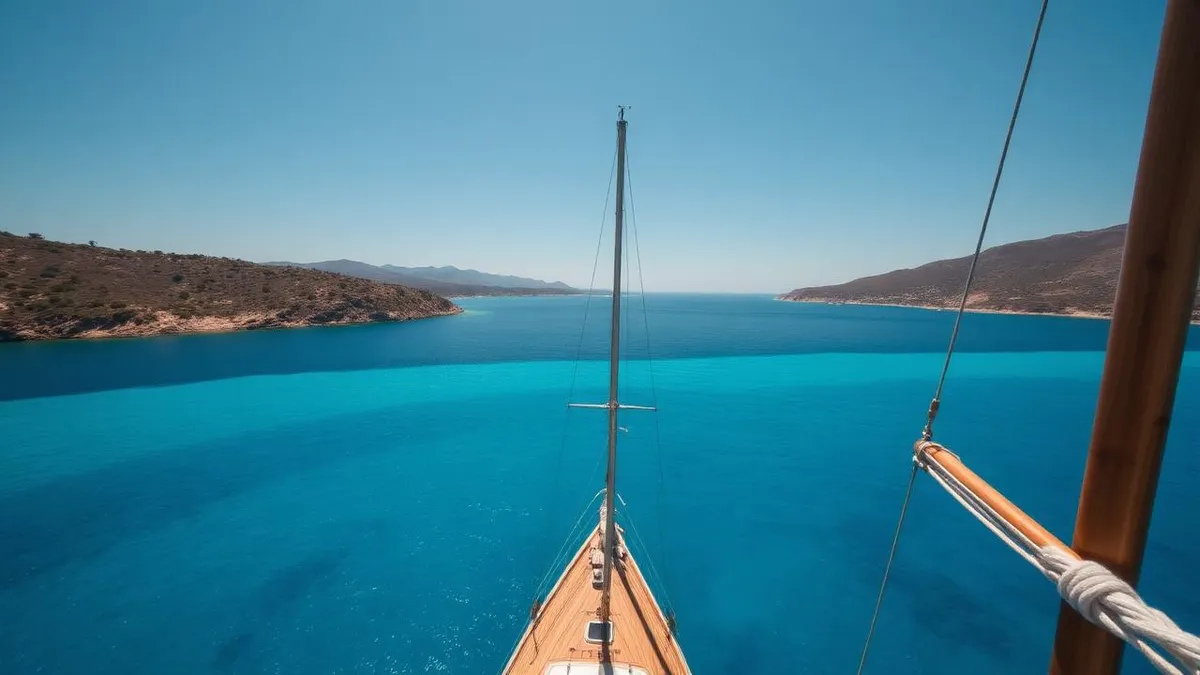
While charter operators crowd the French Riviera and Croatian coastline, Turkey's Turquoise Coast offers one of the Mediterranean's most compelling — and most undervalued — revenue opportunities. With operating costs 25–40% lower than western Mediterranean equivalents and a charter format that appeals to a distinct and loyal clientele, the gulet market deserves serious attention from revenue-focused operators.
The Gulet: A Charter Format Unlike Any Other
Gulets are traditional Turkish wooden sailing vessels, typically 20–40 metres in length, that have been adapted for luxury charter. Their wide beam, expansive deck space, and shallow draft make them ideal for coastal cruising and island-hopping along Turkey's spectacularly beautiful southwestern coastline. The format creates an experience fundamentally different from a motor yacht charter — more intimate, more connected to the sea, and infused with cultural authenticity.
There are approximately 2,000+ gulets operating commercially in Turkish waters, ranging from basic tourist vessels to ultra-luxury custom builds with interiors rivalling boutique hotels. The luxury segment (vessels over 30m with premium fit-out) represents roughly 200–300 vessels and is where the revenue opportunity concentrates.
Revenue Benchmarks: The Numbers
Weekly Rate (Luxury)
€30,000–€80,000
Peak Season Premium
+25–40%
Season Length
May–October (24 weeks)
Target Utilisation
18–22 weeks
Operating Margin
35–50%
Repeat Booking Rate
38–45%
Compared to a 40m motor yacht in the western Mediterranean — where operating costs consume 55–65% of charter revenue — a well-managed luxury gulet can achieve operating margins of 35–50%. Lower fuel costs (gulets sail extensively under wind power), lower crew costs (Turkish crew wages are 40–50% below French or Italian equivalents), and dramatically lower berth costs create a margin structure that rewards efficient operations.
The Turquoise Coast: Why This Coastline Works
Turkey's southwestern coast — stretching from Bodrum through Göcek, Fethiye, and Kaş to Antalya — is one of the most beautiful and undeveloped coastlines in the Mediterranean. Ancient Lycian ruins dot the hillsides, secluded bays offer protected anchorage, and the water clarity rivals the Caribbean. The coastline's geography creates natural itineraries: a week-long charter can visit 15–20 distinct anchorages without repeating, each offering different character and experiences.
The cruising infrastructure is mature: fuel stations, provisioning services, and medical facilities are available throughout the Bodrum-Antalya corridor. Marina capacity has expanded significantly, with D-Marin Göcek and Yalıkavak Marina now offering berths for vessels up to 140m. Immigration and customs procedures for international charters are straightforward, removing a historical friction point.
Guest Demographics and Demand Patterns
Gulet charter guests are a distinct demographic. They tend to be experienced travellers who have already done the western Mediterranean circuit and seek something more authentic. Northern European families (UK, Germany, Netherlands, Scandinavia) form the core market, with growing interest from North American and Middle Eastern clients. The typical gulet charter party is 8–16 guests — larger than motor yacht charters — creating opportunities for group pricing strategies.
Seasonality is pronounced. July and August account for 55% of annual revenue, with June and September contributing 25%. The shoulder months (May and October) offer lower rates but near-perfect sailing conditions and fewer crowds — making them increasingly popular with experienced charterers who know the market.
Growth Strategies for Gulet Operators
Premiumisation
The biggest revenue opportunity in the Turkish gulet market is premiumisation — upgrading vessel interiors, cuisine, and service to justify rates 50–100% above the market average. A gulet with hotel-quality bedding, a professional chef trained in Mediterranean cuisine, a curated wine list, and modern water toys can command €60,000–€80,000 per week where a standard vessel charges €30,000–€40,000. The upgrade investment typically pays back within 2–3 seasons.
Cross-Market Promotion
Partner with operators in Croatia, Greece, and Italy to offer comparative charter experiences. Many guests who charter catamarans in Croatia one year are excellent prospects for a gulet charter in Turkey the next. Cross-referral networks with commission structures of 10–15% create a win-win pipeline between non-competing markets.
Extended Season Programming
Develop themed charter programmes for May and October to extend the season: yoga and wellness retreats, culinary discovery tours, historical and archaeological voyages, and photography expeditions. These thematic charters attract a different clientele than peak-season family bookings and can fill 4–6 additional weeks per season at rates 15–20% above standard shoulder-season pricing.
Risks and Considerations
Turkey's geopolitical position creates perception challenges that suppress demand below its potential. Currency volatility (the Turkish Lira depreciated 35% against the Euro in 2024–2025) creates pricing complexity for operators who pay costs in Lira but earn in Euros — though this same dynamic creates margin expansion opportunities for foreign-owned or Euro-denominated operations.
Insurance costs have increased 15–20% over the past two years, and regulatory changes around maritime licensing require ongoing compliance investment. These factors favour professional, well-capitalised operators over informal owner-operators — accelerating market consolidation and creating opportunities for those with the resources to operate at scale.
Explore our gulet charter vertical
View Gulet Charter Strategy →Put this on autopilot. Our yacht marketing platform publishes your fleet across 11 channels, captures every inquiry and reports revenue per vessel. See how the engine works →