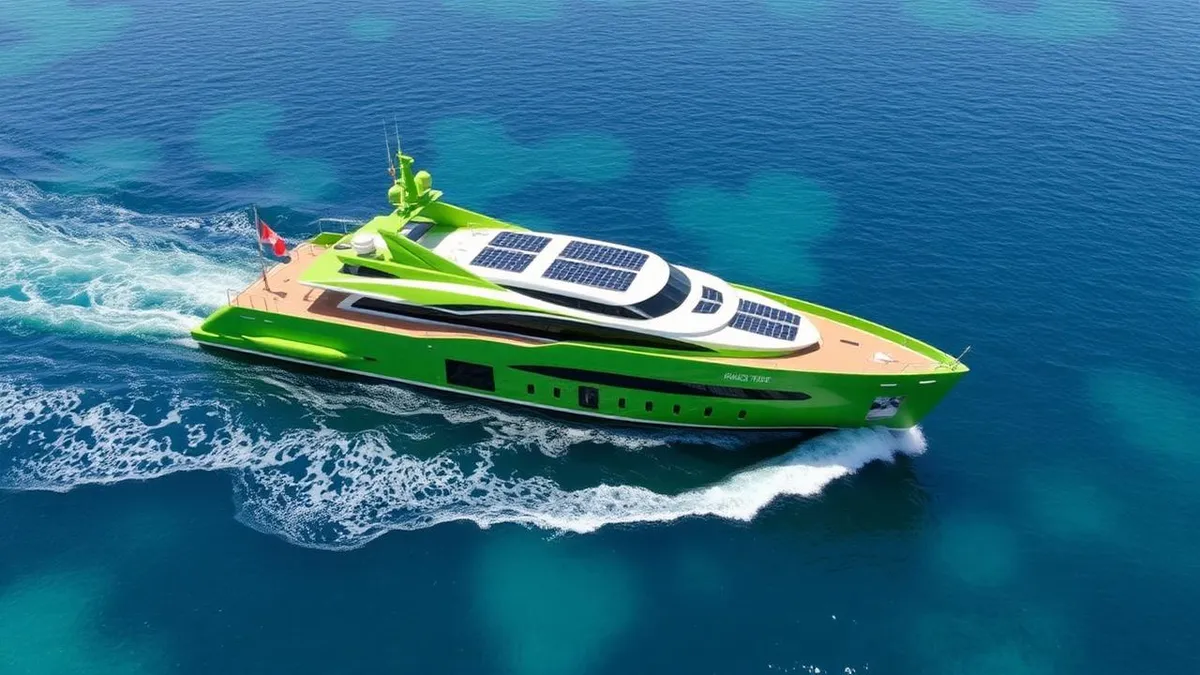
Sustainability in yachting has moved from a fringe concern to a commercial imperative. Charter guests under 45 are 2.3x more likely to select a vessel with green credentials, and early adopters are commanding 15–20% rate premiums. Here's how sustainable technology is creating new revenue streams — not just good PR.
The Commercial Case for Green Yachting
The narrative around sustainable yachting has shifted fundamentally. Five years ago, hybrid propulsion and environmental certifications were viewed as costly gestures — additions that increased build costs without clear commercial return. Today, the data tells a different story. Vessels with documented sustainability practices achieve higher occupancy rates, command premium pricing, and attract a younger, faster-growing demographic segment.
The 2026 market outlook shows that sustainability is not replacing luxury — it's being integrated into the luxury proposition. Guests don't want to sacrifice comfort for conscience; they want both, and they'll pay for it. The operators who understand this dual demand are capturing market share.
Green Technologies That Drive Revenue
1. Hybrid and Electric Propulsion
Hybrid diesel-electric systems are the most commercially proven green technology in the superyacht sector. They reduce fuel consumption by 15–30% at cruising speeds and enable silent, zero-emission operation at anchor — a feature that dramatically enhances the guest experience. The initial investment (€500,000–€2 million for a 40m refit) is significant, but the combination of fuel savings (€50,000–€100,000 per season) and rate premiums (15–20%) creates a 3–5 year payback period.
Fully electric propulsion remains limited to smaller vessels and day charters, but the technology is advancing rapidly. For catamaran charter operators, electric propulsion is particularly compelling due to the format's lower power requirements and the ability to integrate solar panel arrays on the wide deck surface.
2. Water Treatment and Marine Conservation
Advanced water treatment systems — desalination, grey water recycling, and zero-discharge blackwater processing — reduce environmental impact and operational costs simultaneously. A vessel that produces its own fresh water and processes waste on board reduces port dependency, enabling access to remote anchorages that competitors can't reach. This operational flexibility directly translates to itinerary differentiation and guest satisfaction.
3. Sustainable Provisioning and Sourcing
Beyond the vessel itself, sustainability extends to operations. Chefs who source from local fishermen and organic farms, crews who coordinate with marine conservation organisations for guest activities, and operators who offset carbon emissions through verified programmes — these practices resonate deeply with environmentally conscious guests. They also create marketing differentiation that justifies premium positioning.
Certification and Credentialing
Several certification frameworks have emerged to validate green yachting claims. The most commercially valuable include the Blue Flag Marina programme, RINA Green Star certification, and the Water Revolution Foundation's Yacht Environmental Transparency Index (YETI). These certifications serve as trust signals for environmentally conscious bookers — and operators with certified vessels report 25% higher inquiry rates from this demographic.
The certification process itself drives operational improvement. Preparing for YETI assessment, for example, requires systematic evaluation of energy consumption, waste management, and material sourcing — creating a roadmap for efficiency improvements that reduce operating costs independent of any marketing benefit.
The Guest Perspective: What Green Charterers Want
Research from the UHNW charter guest segment reveals nuanced preferences. Green charterers don't want an overtly eco-activist experience. They want the same luxury, comfort, and service they'd expect from any premium charter — delivered in a way that aligns with their values. The messaging matters: "guilt-free luxury" resonates far more than "eco-friendly" or "sustainable," which carry associations of compromise.
Specific guest preferences include: silent operation at anchor (91% cite this as important), locally sourced cuisine (87%), reef-safe sunscreen provided onboard (78%), marine biology excursions (72%), and carbon offset options (65%). Notably, only 34% of green charterers specifically require hybrid propulsion — suggesting that operational sustainability practices matter more to guests than headline technology.
Revenue Impact: A Case Study
Consider a 38m motor yacht that invested €800,000 in a hybrid refit and sustainable operations programme in 2024. In its first post-refit season:
- Weekly rate increased from €120,000 to €142,000 (18% premium)
- Booking weeks increased from 16 to 20 (25% improvement)
- Fuel costs decreased by €62,000 (22% reduction)
- Total revenue increased by €924,000
- ROI on green investment: 115% in Year 1
These results are not exceptional — they're representative of what well-executed green transitions deliver. The combination of rate premiums, improved occupancy, and operational savings creates compounding returns that accelerate over multiple seasons as the vessel builds its green reputation.
Strategic Recommendations
Start with operational changes (provisioning, waste management, guest experience) before investing in technology. These low-cost improvements create immediate marketing differentiation and generate revenue uplift that funds larger capital investments. Then prioritise hybrid propulsion, which delivers the strongest combination of guest experience improvement, cost reduction, and rate premium. Finally, pursue certification to validate your position and convert environmentally conscious inquiries into bookings.
Assess your fleet's green revenue potential
Request a Strategic Charter Audit →Put this on autopilot. Our yacht marketing platform publishes your fleet across 11 channels, captures every inquiry and reports revenue per vessel. See how the engine works →