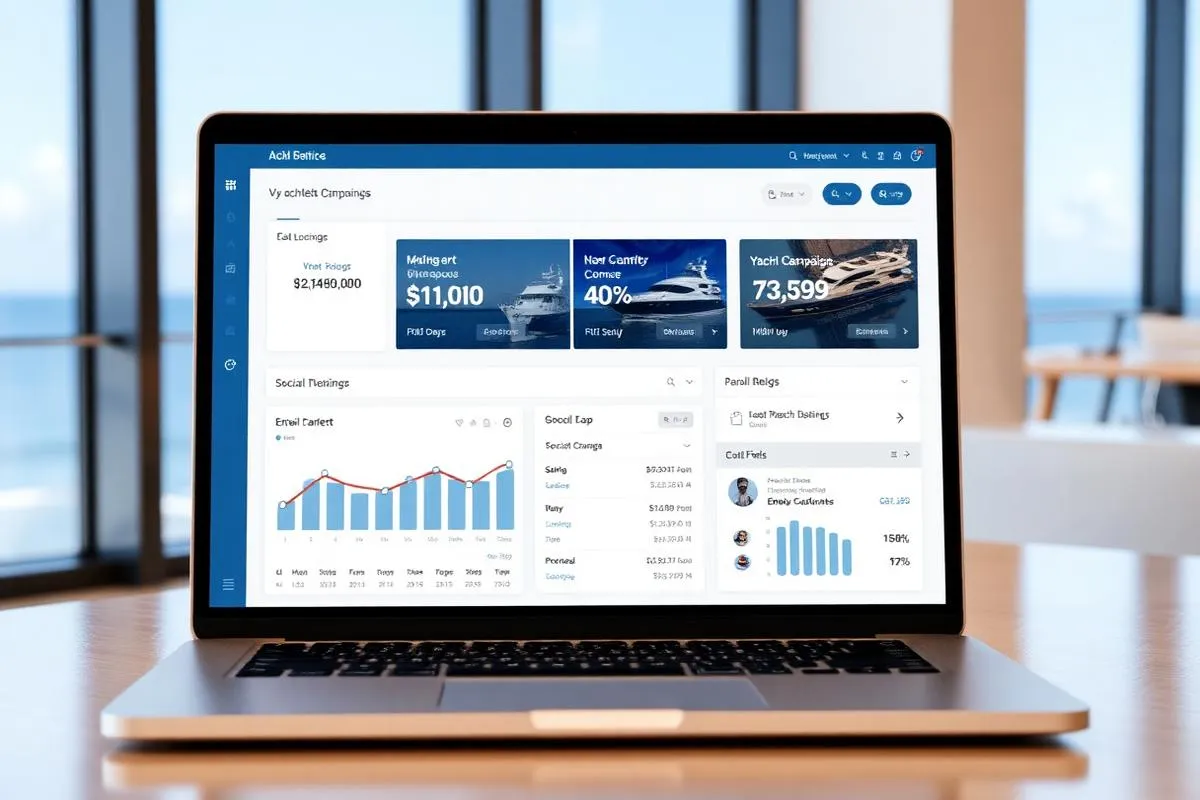
The yacht charter industry has been slow to embrace digital marketing — and the operators who've moved first are reaping disproportionate rewards. While most charter companies still rely almost entirely on broker networks and boat show presence, a growing cohort of digitally sophisticated operators are driving 30–50% of their bookings directly. The result: higher margins, stronger client relationships, and a marketing engine that compounds in value over time.
Why Direct Bookings Transform Charter Economics
The financial case for direct bookings is stark. A charter booked through a broker network incurs 15–20% commission. On a €150,000 charter week, that's €22,500–€30,000 in commission. A direct booking — driven by your own marketing — retains that margin entirely. An operator who shifts just 10 charters per season from brokered to direct saves €225,000–€300,000 annually. This is not theoretical — it's the reality for operators who invest in digital marketing competence.
Beyond margin improvement, direct bookings build a proprietary client database — the most valuable long-term asset in any charter business. Every direct client becomes a potential repeat booker and referral source, compounding your marketing investment over years.
The Digital Marketing Stack for Yacht Charters
1. Search Engine Optimisation (SEO)
SEO is the foundation of long-term digital visibility. Charter guests begin their journey with search queries like "luxury yacht charter Mediterranean," "superyacht hire Croatia," or "best yacht charter companies 2026." Operators who rank on page one for these queries capture high-intent traffic at zero marginal cost.
Effective yacht charter SEO requires content authority — comprehensive, expert content that demonstrates deep industry knowledge. Blog content covering destination guides, market insights, and charter planning advice builds topical authority that Google rewards with higher rankings.
2. Content Marketing and Storytelling
Luxury charter guests don't respond to transactional advertising. They respond to storytelling. The most effective content marketing in this sector uses narrative to create aspiration: the story of a family's first charter together, the journey of a yacht from build to first charter season, or a captain's guide to hidden Mediterranean anchorages.
Video content is particularly powerful. A three-minute professionally produced film showing a day aboard — sunrise yoga on the foredeck, the chef preparing lunch with locally caught fish, a sunset cocktail session as the yacht anchors in a turquoise bay — generates more enquiries than a month of display advertising.
3. Social Media: Quality Over Frequency
Instagram remains the dominant platform for yacht charter marketing, but the approach matters more than the frequency. Posting daily iPhone photos of empty decks does not build a premium brand. Posting weekly, professionally shot content that tells a story — a chef's knife cutting through a freshly caught tuna, a drone shot tracking the yacht through crystal waters, a candid moment of guests laughing at dinner — builds aspirational desire.
LinkedIn is increasingly relevant for corporate charter marketing. Decision-makers who would never engage with yacht content on Instagram do respond to LinkedIn posts positioned as business insights: "Why our corporate clients choose yacht charters for their annual strategy retreats" or "The ROI of incentive travel: lessons from 50 corporate charters."
4. Email Marketing: The Retention Engine
Email remains the highest-ROI digital marketing channel across all industries, and yacht chartering is no exception. A well-segmented email programme — separating prospects, first-time guests, and repeat clients — delivers personalised content at minimal cost.
For prospects: seasonal destination highlights, new yacht announcements, and special offers. For past guests: personalised rebooking incentives, crew updates, and exclusive access to new inventory. For advocates: ambassador programme updates and referral rewards. The key is relevance — every email should feel personally valuable, not like a broadcast.
5. Paid Advertising: Precision Targeting
Paid digital advertising for yacht charters requires precision targeting to avoid wasting budget on unqualified audiences. Google Ads targeting long-tail keywords ("luxury crewed yacht charter Amalfi Coast 2026") captures high-intent search traffic. Meta (Facebook/Instagram) advertising using lookalike audiences built from your existing client database identifies prospects with similar profiles.
The key metric is cost per qualified enquiry, not cost per click. A successful yacht charter advertising programme generates qualified enquiries at €200–€500 each — expensive by e-commerce standards, but extremely efficient when each conversion generates €50,000–€300,000 in revenue.
Website Optimisation: Your Digital Showroom
Your website is the single most important sales tool in your digital arsenal. For charter guests spending six figures, the website must communicate luxury, professionalism, and trust. This means:
- Cinematic imagery — professional photography and video that showcase the experience, not just the yacht
- Fast load times — a 3-second load time loses 40% of luxury consumers
- Mobile excellence — 60%+ of initial yacht charter research happens on mobile devices
- Clear calls to action — make it effortless to enquire, without aggressive pop-ups or chatbots
- Social proof — guest testimonials, media mentions, and industry credentials build trust
Measuring Digital Marketing Performance
Track the metrics that matter for high-value, low-volume businesses:
- Cost per qualified enquiry — by channel and campaign
- Enquiry-to-booking conversion rate — overall and by source
- Direct booking percentage — the share of total revenue from non-brokered sources
- Client acquisition cost — total marketing spend divided by new clients acquired
- Content engagement — which content pieces generate the most enquiries (not just traffic)
The Integration Imperative
Digital marketing doesn't replace broker relationships — it complements them. The most successful operators use digital channels to build brand awareness and capture direct enquiries while maintaining strong broker networks for market reach. The goal is to shift the ratio progressively: from 90% brokered / 10% direct to 60% brokered / 40% direct over three to five years.
This shift requires investment — in content creation, platform management, and potentially dedicated marketing personnel. But the return is structural: a direct client relationship, a proprietary database, and marketing leverage that increases with every season. For a step-by-step implementation plan, see our direct booking funnel guide. For operators committed to building long-term charter businesses, digital marketing is not optional — it's the foundation of sustainable growth.
Put this on autopilot. Our yacht marketing platform publishes your fleet across 11 channels, captures every inquiry and reports revenue per vessel. See how the engine works →