
In the luxury yacht charter industry, a flawless guest experience is no longer a differentiator — it is the baseline expectation. Guests spending €50,000–€500,000+ per week demand seamless service, personalised attention, and moments that transcend the ordinary. The operators who master this earn repeat bookings, organic referrals, and a reputation that no marketing budget can buy.
Why Guest Experience Is the Ultimate Revenue Driver
The data is unambiguous: acquiring a new charter client costs 5–7× more than retaining an existing one. Yet many operators invest heavily in marketing while neglecting the onboard experience that determines whether a guest ever returns. According to industry surveys, 78% of charter guests who rate their experience as "exceptional" rebook within 18 months. Compare that to just 12% of those who rate it "satisfactory."
This isn't just about hospitality — it's about revenue architecture. A single repeat client who charters annually for five years represents €250,000–€2.5 million in lifetime value. Factor in the two to three referrals that typically follow a memorable charter, and the compound effect on your bottom line becomes extraordinary.
The 10 Pillars of an Exceptional Charter Guest Experience
1. Pre-Charter Communication That Builds Anticipation
The guest experience begins weeks before embarkation. Elite operators send a detailed pre-charter questionnaire covering dietary requirements, activity preferences, celebration dates, and even preferred pillow firmness. This information is shared with the crew well in advance, enabling them to prepare a truly bespoke experience.
Beyond logistics, the best operators create anticipation through curated welcome packages: a digital itinerary with stunning photography of planned anchorages, a personalised playlist for the yacht's sound system, and a handwritten welcome note from the captain. These touches cost almost nothing but set the emotional tone for the entire charter.
2. First Impressions: The Embarkation Moment
Research in luxury hospitality shows that guests form 80% of their overall impression within the first 30 minutes. On a yacht charter, embarkation is everything. The dock should be pristine, the crew lined up in crisp uniforms, and a welcome drink — tailored to the guest's known preferences — waiting at the passerelle.
Smart operators use this moment to conduct a gentle orientation rather than a rigid safety briefing. Walk guests through the yacht as if you're showing them their private home for the week. Point out the details: the fresh flowers in their preferred colour, the vintage champagne chilling in the saloon, the children's toys already set up on the sun deck.
3. Crew Excellence: The Human Differentiator
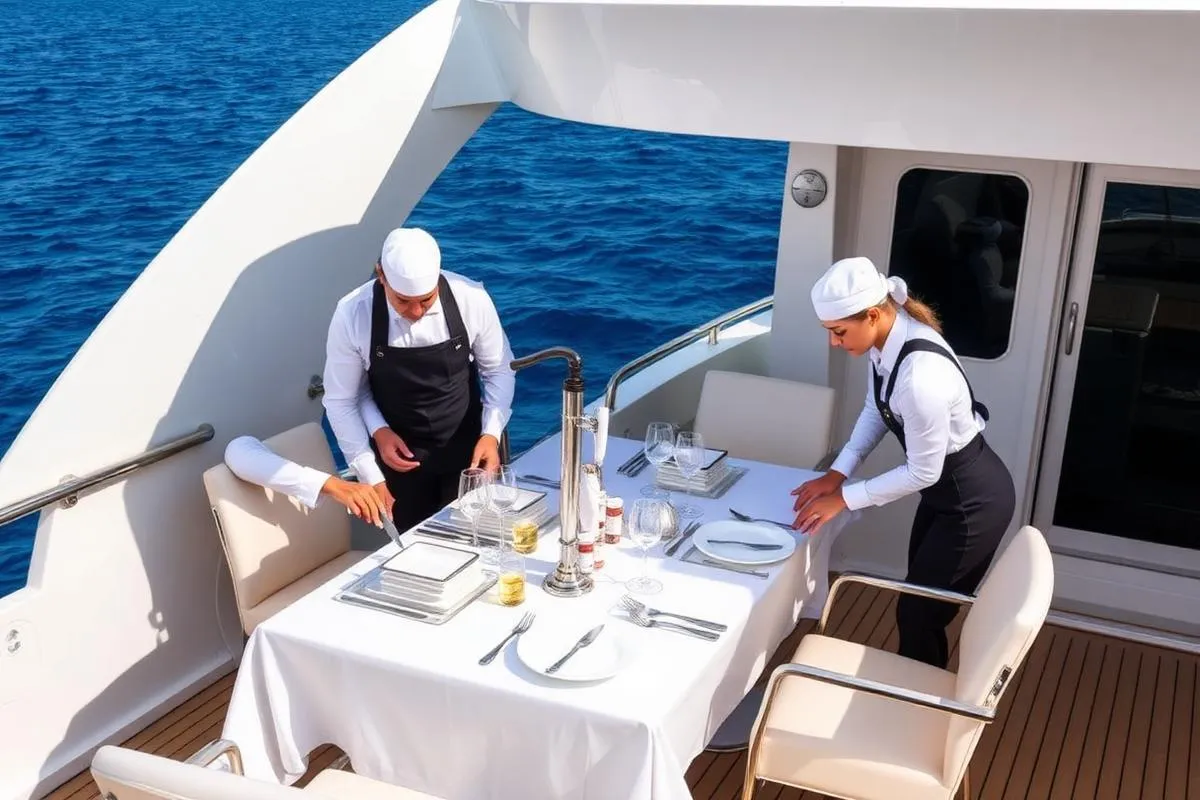
Your crew is your brand. Guests remember how the stewardess anticipated their need for a fresh towel before they asked. They remember the chef who recreated their grandmother's recipe from a casual dinner conversation. They remember the captain who found a secluded bay when the planned anchorage was crowded.
Investing in crew training delivers the highest ROI of any operational expenditure. The best crews operate with what the hospitality industry calls "anticipatory service" — reading cues, remembering preferences, and solving problems before guests are even aware of them. This is the difference between a good charter and one that generates a five-star review and three referrals.
4. Culinary Excellence as a Centrepiece
Food is consistently ranked as the #1 factor in charter guest satisfaction surveys. A talented charter chef who can produce Michelin-quality meals in a compact galley, adapt to dietary restrictions on the fly, and create themed dining experiences — a Greek meze night under the stars, a sushi masterclass on the swim platform — transforms meals into memories.
The revenue implications are significant. Operators with exceptional culinary programmes command 15–25% premium pricing and see dramatically higher rebooking rates. The investment in a top-tier chef and quality provisioning pays for itself many times over.
5. Itinerary Flexibility and Local Knowledge
The best charter experiences feel spontaneous even when they're carefully orchestrated. Guests value a captain who suggests a hidden beach they'd never find on their own, or reroutes to avoid weather without making it feel like a compromise. This requires deep local knowledge and the confidence to deviate from the planned route when a better option presents itself.
Operators should build relationships with local restaurants, dive centres, cultural sites, and exclusive venues in every cruising ground. The ability to secure a last-minute reservation at a cliffside restaurant in Positano or arrange a private vineyard tour in Hvar elevates a charter from excellent to legendary.
6. Water Toys and Onboard Amenities
Today's charter guests expect a floating adventure playground. The standard complement of jet ski, paddleboards, and snorkelling gear is table stakes. Operators differentiating on experience invest in premium amenities: e-foils, seabobs, inflatable waterslides, underwater scooters, and even submersibles on larger yachts.
But it's not just about having the toys — it's about how they're presented. The best crews proactively set up activities each morning based on the day's itinerary and conditions, rather than waiting for guests to ask. A paddleboard yoga session at sunrise or a sunset kayak tour creates Instagram moments that drive organic marketing.
7. Personalisation at Scale
True personalisation means treating every guest as an individual, not a booking number. This ranges from stocking their preferred brand of gin to adjusting the air conditioning to their preferred temperature before they board. For repeat clients, maintaining a detailed guest profile ensures that each subsequent charter improves upon the last.
8. Managing Expectations and Problem Resolution
Even on the best-managed yachts, issues arise — weather changes plans, equipment malfunctions, or a guest develops seasickness. The hallmark of an exceptional operation is not the absence of problems but the grace with which they're resolved. Crew should be empowered to make on-the-spot decisions: comping a spa treatment, arranging an unexpected shore excursion, or upgrading a wine selection.
9. The Farewell: Ending on a High
The disembarkation experience is as critical as the welcome. A thoughtfully assembled photo book or digital gallery of the week's highlights, a handwritten thank-you card from the captain and crew, and a small departure gift create a lasting emotional imprint. These final touches are what guests describe when recommending you to friends.
10. Post-Charter Follow-Up
The relationship doesn't end at the dock. A structured post-charter follow-up programme — a thank-you call within 48 hours, a professional photo gallery within a week, and a personalised rebooking offer within a month — converts one-time guests into lifetime clients. Operators who implement systematic follow-up see rebooking rates increase by 35–45%.
The Revenue Impact: Quantifying Guest Experience
The financial case for investing in guest experience is compelling. Operators who score in the top quartile for guest satisfaction achieve:
- 42% higher rebooking rates compared to industry average
- 3.2 referrals per charter versus 0.8 for average operators
- 18–25% pricing premium justified by reputation and demand
- 67% lower marketing cost per acquisition due to organic growth
In a market where global charter demand continues to grow, the operators who treat guest experience as a strategic investment — not an operational cost — will capture a disproportionate share of the market's most valuable clients.
Building Your Guest Experience Framework
Start by auditing every touchpoint in your current guest journey. Map the experience from first enquiry to post-charter follow-up. Identify the moments that matter most and invest disproportionately in those. Train your crew not just in service skills but in emotional intelligence. Build systems that capture and act on guest preferences. And measure everything — what gets measured gets improved. If you're new to chartering, our first-time booking guide shows the guest perspective.
The yacht charter industry is evolving. Guests have more options than ever. The operators who win won't be those with the newest yachts or the lowest prices — they'll be those who create experiences so remarkable that guests can't imagine chartering with anyone else. Understanding the full cost structure and choosing the right yacht type are the first steps in delivering that experience.
Put this on autopilot. Our yacht marketing platform publishes your fleet across 11 channels, captures every inquiry and reports revenue per vessel. See how the engine works →